
Scheduled commercial roof inspections, documented maintenance, repair history, and priority response for Lexington buildings and portfolios.
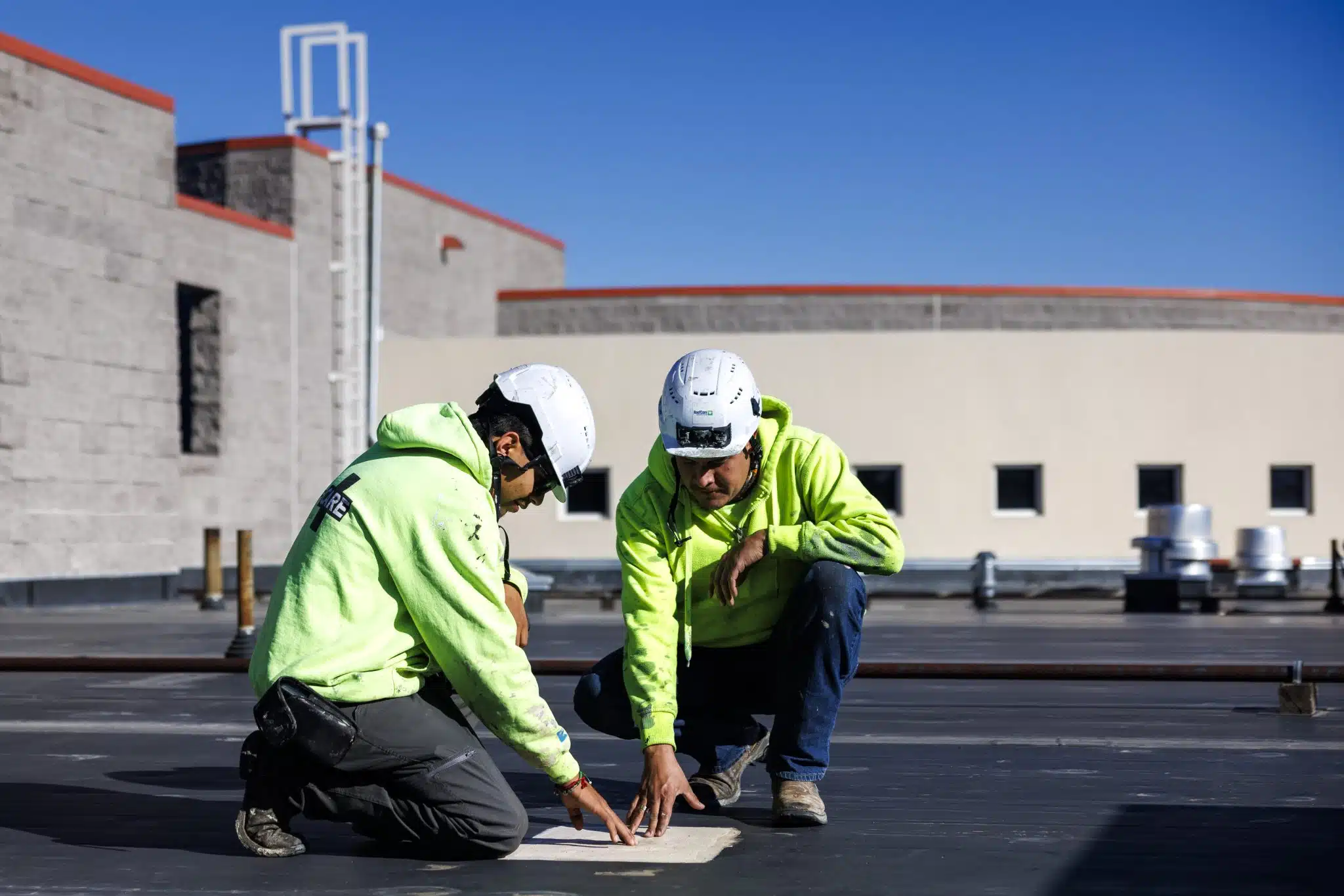
A commercial roof service agreement gives owners and facility teams a repeatable way to find small problems before they become interior damage, emergency calls, or premature replacement decisions.
What the service relationship covers
Scheduled roof visits can include drain and scupper review, seam and flashing observations, penetration checks, edge-metal review, debris concerns, previous repair follow-up, and photo documentation. The exact scope should match the roof system, building use, access limits, and known leak history.
When active water appears, a documented roof history helps shorten the conversation. The response can start with known conditions, previous repair areas, roof access, and the building contacts who need updates.
Better records for better capital decisions
Service records show which areas remain stable, which repairs keep returning, and where deterioration is spreading. That history gives ownership a stronger basis for deciding when to repair, restore with a coating, recover, or replace.
For multi-building portfolios, the same process helps rank roof needs by urgency and business impact instead of letting the loudest leak take every dollar.
Built for commercial operations
Lexington offices, retail centers, medical buildings, campuses, warehouses, industrial facilities, and multifamily properties all have different access and scheduling constraints. A useful agreement accounts for those realities and keeps communication simple.