
Manufacturing Facility Roofing in Lexington, KY from Commercial Roofing of Lexington.
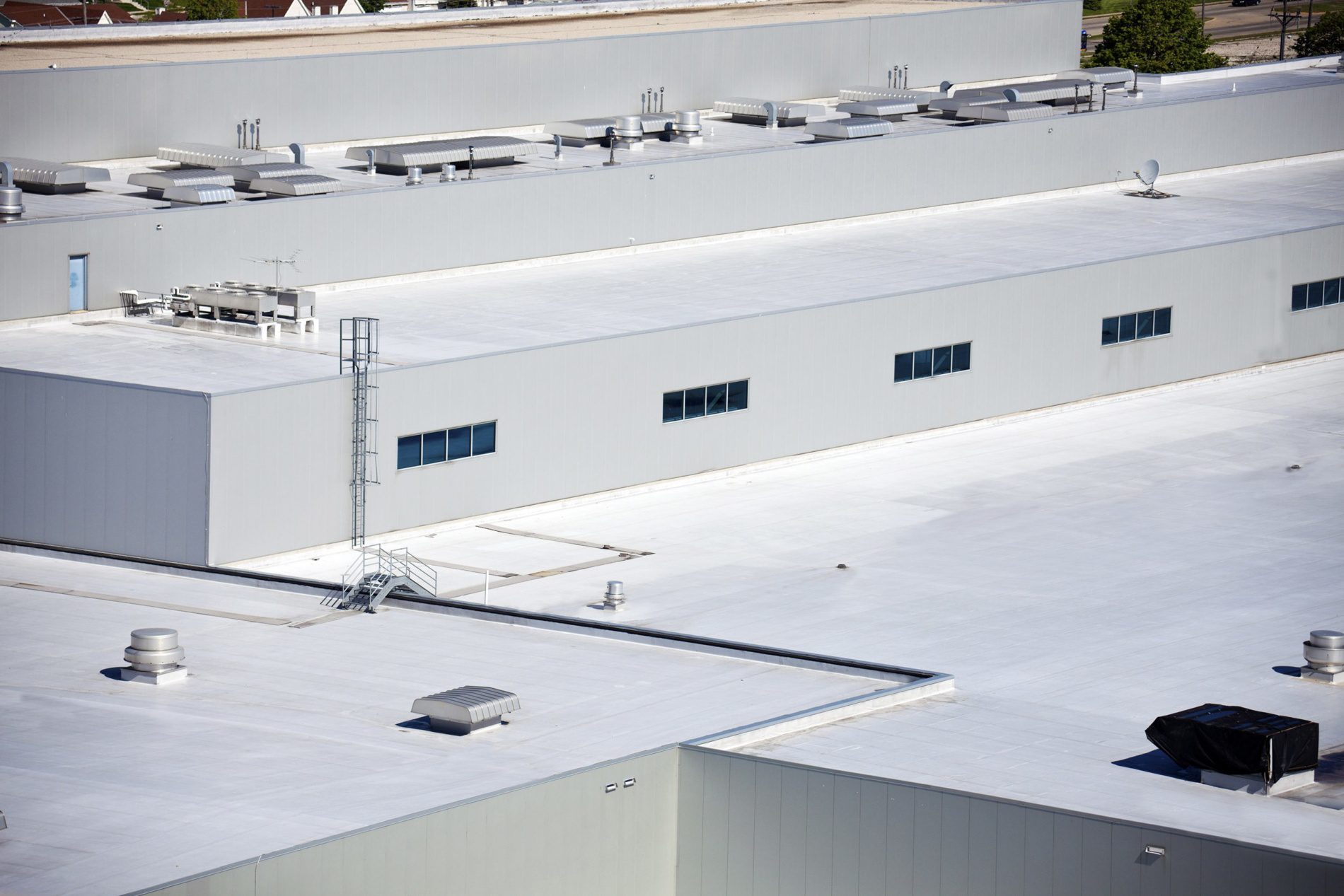
Toyota Motor Manufacturing Kentucky, located just outside Lexington in Georgetown, stands as one of the most demanding commercial roofing environments in the region. The plant's sprawling assembly lines, paint booths, and stamping operations generate heat, chemical vapors, and constant mechanical vibration that stress conventional roofing systems beyond their rated lifespans. Commercial roofing contractors serving Lexington's manufacturing corridor must understand these conditions before they ever set foot on a production facility roof.
Process equipment installations are a defining challenge on manufacturing roofs in Lexington. HVAC units, exhaust fans, and ventilation stacks serving paint lines and body shops are clustered densely across the roof plane. Each penetration represents a potential leak point, and the weight of this equipment demands reinforced decking and properly engineered load paths. Contractors who specialize in industrial roofing pre-engineer curb placements and flashing details during the design phase rather than improvising on the day of installation.
Chemical and fume exposure shortens membrane life dramatically on Lexington's auto manufacturing roofs. Isocyanates from urethane paint, solvents from surface prep operations, and exhaust from stamping presses all deposit on the roof surface over time. TPO membranes with enhanced chemical resistance formulations, or two-ply modified bitumen systems with chemical-resistant cap sheets, outperform standard assemblies in these environments. Specifying the right membrane chemistry upfront avoids premature failure and costly early replacement cycles.
Vibration from stamping presses and heavy conveyor systems transmits through the building structure and into the roof deck. This cyclic movement fatigues membrane seams and flashings, particularly at perimeters and around equipment curbs. Mechanically attached systems with wide-pattern fastening grids handle vibration better than fully adhered membranes over steel decks in high-vibration zones. Some contractors in the Lexington market use induction-welded fastening systems that eliminate field seams near the highest-vibration areas of the plant.
Skylights are integral to large-bay manufacturing plants in Lexington, providing daylighting that reduces energy costs and improves worker visibility on the production floor. Polycarbonate dome skylights and continuous ridge vents require careful integration into the roofing system. Condensation management is critical , skylights over paint booths and wash areas experience extreme humidity gradients, and improper curb flashing leads to interior water damage that shuts down production lines during repair.
Schedule coordination is perhaps the most complex aspect of manufacturing plant roofing in Lexington. Toyota, Toyota suppliers, and other Lexington-area manufacturers operate on tight production schedules tied to just-in-time delivery chains. A roofing crew that disrupts a production line can cost the facility tens of thousands of dollars per hour in lost output. Experienced contractors develop phased work plans that confine noisy or odor-producing operations to planned shutdown windows, coordinate with plant facilities managers weeks in advance, and maintain communication with shift supervisors throughout the project.
Lexington's climate adds its own layer of complexity. The city sits in a zone that receives significant freeze-thaw cycling through the winter months, with spring rains that can be heavy and persistent. Manufacturing facilities that run 24/7 heating cycles create warm roof decks that accelerate ice dam formation at eaves during cold snaps. Proper insulation design , including tapered insulation to eliminate low points and ensure positive drainage , prevents ponding that would otherwise freeze and force water under membrane edges.
Preventive maintenance programs tailored to manufacturing environments make economic sense in Lexington. Semi-annual inspections timed around planned plant shutdowns allow crews to reseal flashings, clear drains, and address any membrane blisters before they become interior leaks. A documented maintenance program also supports warranty compliance and provides the capital planning data that plant facilities managers need when presenting multi-year CAPEX budgets to regional management.
Long-term partnerships between Lexington-area manufacturers and specialized commercial roofing contractors produce better outcomes than lowest-bid procurement cycles. When a contractor understands the layout of a specific facility, knows which production zones are most sensitive to disruption, and has established relationships with the plant's facilities team, response times shrink and project execution improves. For manufacturers operating in Lexington's competitive automotive and industrial supply chain, that operational reliability is worth more than any marginal cost savings from switching contractors.
- How does chemical exposure from auto manufacturing affect roofing membranes in Lexington?
- Paint solvents, isocyanates, and exhaust deposits degrade standard TPO and EPDM membranes faster than typical commercial applications. Contractors specify chemically resistant membrane formulations and protective coatings to extend system life in these environments.
- Can roofing work be done while a Lexington manufacturing plant stays in production?
- Yes, with careful phasing. Noise-sensitive or odor-producing operations are scheduled during planned shutdown windows, while membrane work over non-production zones can often proceed during normal shifts with proper coordination with the plant facilities team.
- How does vibration from stamping equipment affect roof systems?
- Cyclic vibration fatigues membrane seams and flashings at perimeters and equipment curbs. Mechanically attached systems with wide-pattern fastening, or induction-welded fasteners, handle vibration better than fully adhered membranes over steel decks.
- What roofing system works best for skylights on Lexington manufacturing plants?
- Properly curbed polycarbonate domes with raised-profile flashing assemblies perform well. Condensation control at the curb base is critical, especially over high-humidity production zones like paint booths and wash stations.
- How often should a manufacturing plant in Lexington schedule roof inspections?
- Semi-annual inspections, timed to coincide with planned plant shutdowns in spring and fall, allow crews to address seasonal wear before it becomes interior damage. Annual inspections are the minimum for warranty compliance on most commercial systems.