
Modified Bitumen Roofing in Lexington, KY from Commercial Roofing of Lexington.
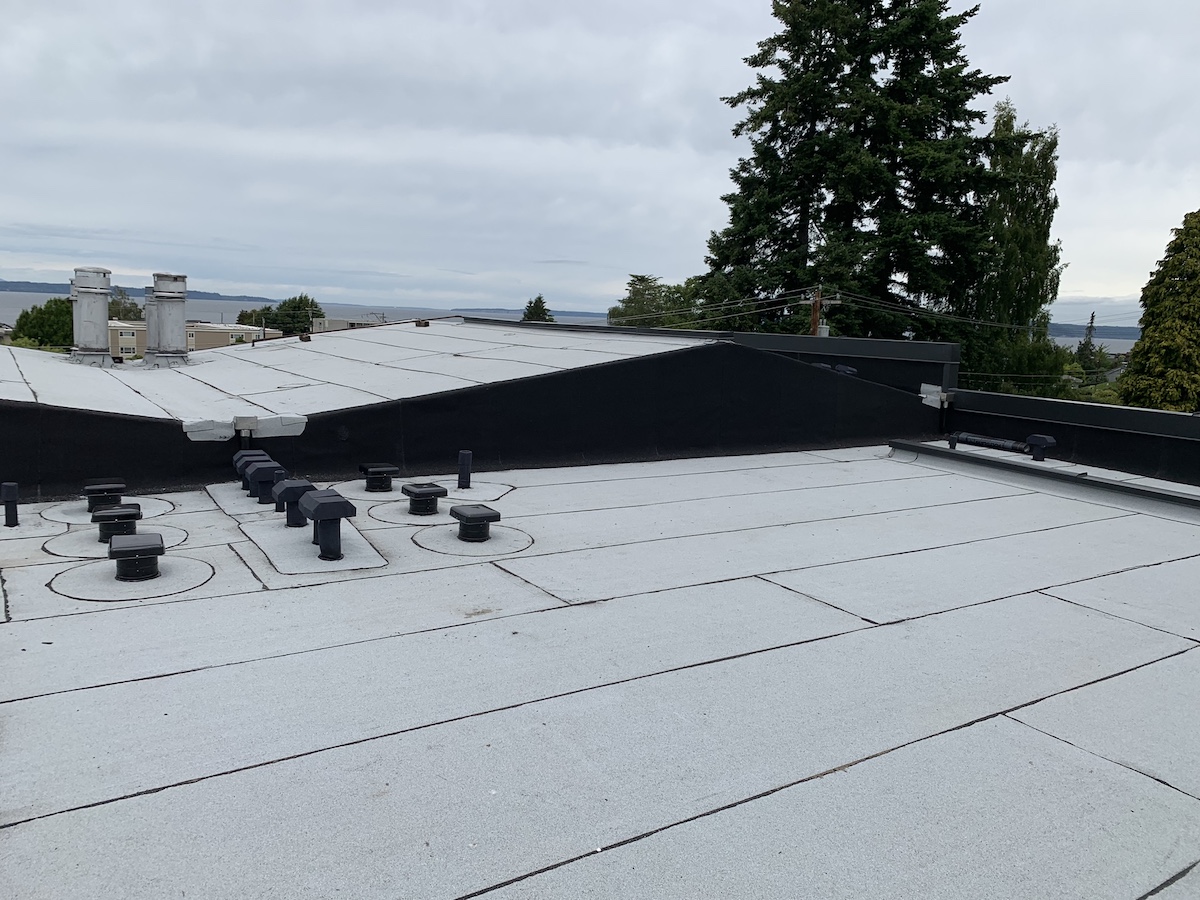
Modified bitumen roofing is the system that bridges the era between traditional built-up roofing and modern single-ply membranes, and Lexington's commercial stock has a significant inventory of it , primarily on buildings constructed or re-roofed between , older retail centers in the Beaumont Centre and Southland Drive corridors, and community college facilities at Bluegrass Community and Technical College all represent the kind of commercial stock where modified bitumen was the contractor's standard specification during that period. Understanding this system's performance characteristics and failure modes is essential to managing the large fraction of the Lexington commercial market that still has mod-bit roofing.
There are two modified bitumen chemistries in the Lexington market, and they behave differently under the Bluegrass climate's thermal demands. SBS , styrene-butadiene-styrene , modified bitumen incorporates a rubber polymer that gives the membrane flexibility and elasticity in cold temperatures. SBS remains pliable in Lexington's winter temperatures, accommodating thermal movement without cracking. APP , atactic polypropylene , modified bitumen uses a plastic polymer that makes the membrane harder and more UV-resistant but less flexible in cold weather. Lexington's freeze-thaw cycling is harder on APP systems than on SBS, and we see more cold-weather cracking failures on APP membranes than on SBS in this market. When we're specifying a new mod-bit system in Lexington, SBS is our default recommendation for the base and cap sheet assembly unless there's a specific reason to deviate.
Torch application is the installation method for the majority of modified bitumen in the Lexington commercial market, and the fire safety implications of torch work are not hypothetical. The Distillery District is the most consequential environment for this conversation , historic masonry warehouse buildings with combustible wood framing, barrel storage areas nearby, and the general high-value character of properties in that district create a fire risk profile that demands careful torch work management. We conduct a site-specific hot-work permit assessment on every torch application project near combustible structures, designate a fire watch who monitors for ignition for a minimum of four hours after torch work concludes, and maintain fire suppression equipment at the work area throughout the installation. The insurance implications of a torch-caused fire at a Distillery District property are severe enough that we will not cut corners on hot-work protocols regardless of project schedule pressure.
Modified bitumen on University of Kentucky campus buildings represents one of the more consistent maintenance portfolios we manage. The campus has multiple buildings with SBS and APP cap sheets that were installed as part of campus-wide re-roofing programs in the 1990s and early 2000s. At 20-plus years of age, many of these systems are showing the predictable failure patterns of aged mod-bit: granule loss and oxidation of the cap sheet surface, lap seam separation at poorly bonded joints, and deterioration of the pitch pockets around the rooftop mechanical equipment that the campus has accumulated over decades of facility additions. UK Facilities Management addresses these buildings through a capital planning process that we support with detailed condition assessments and per-building repair and replacement cost projections.
Baptist Health Lexington and other medical campus buildings with modified bitumen roofing present repair challenges related to occupancy. Torch work on an occupied medical building requires specific precautions beyond the standard hot-work protocol , smoke from torch application can enter HVAC intake systems and cause building-wide air quality events that trigger patient care disruptions. We conduct a pre-work HVAC intake survey on any occupied building where torch work is planned, and we use cold-applied or heat-weld alternative application methods when proximity to air intakes makes torch work impractical. The correct specification for a medical building repair is the one that doesn't cause a facility incident, not the one that's most convenient for the roofing crew.
Granule surface condition is the visual health indicator for modified bitumen cap sheets. A properly surfaced mod-bit cap sheet has a complete, uniform granule layer that protects the bitumen from UV degradation. When the granule layer becomes sparse , through normal weathering, impact damage, or chronic ponding that washes granules to drain areas , the exposed bitumen oxidizes and alligatories, eventually cracking and creating water entry points. We use granule coverage as one of several condition metrics in our mod-bit assessments, mapping areas of significant granule loss as repair or coating candidates. An asphalt emulsion coating applied to granule-depleted areas can extend the cap sheet life several additional years on otherwise sound systems.
Seam quality on modified bitumen is the performance variable that separates a well-installed system from one that will generate repeat service calls within five years of installation. A properly torch-applied SBS lap seam has a continuous bead of bitumen squeezed out of the overlap as the membrane heats and the bitumen melts together , this bead, called the melt bleed, is the visual confirmation that full adhesion has been achieved across the lap. A seam without melt bleed or with discontinuous bleed has adhesion voids that will fail under thermal cycling. We inspect every seam during installation rather than waiting for a quality control walkthrough at project completion , a deficient seam that gets walked over and covered with the next course is invisible until it starts leaking.
Mod-bit on commercial buildings with complex rooflines , the kind of buildings that characterize Lexington's adaptive reuse districts , requires custom flashing fabrication and multi-ply reinforcement at every change of direction. A Warehouse Block building that has been converted to office or event use may have dormers, rooftop additions, multiple roof levels, and parapet conditions that create dozens of membrane-to-wall transitions on a relatively small footprint. Each transition requires properly fabricated stripping and flashing plies that integrate with the base and cap sheet layers. Shortcuts at these transitions , a single-ply flashing strip rather than a built-up reinforced detail , are the source of the early failures we see on poorly executed mod-bit projects on complex buildings.
For building owners with existing modified bitumen systems that are performing adequately but showing early-stage deterioration, a planned maintenance program is more cost-effective than reactive repair. We identify the highest-risk locations annually , typically lap seam edges, flashing terminations, and drain areas , and address developing issues before they become active leaks. This approach extends the service life of a sound mod-bit system by years, deferring the replacement capital expenditure while keeping the building dry. Properly maintained SBS modified bitumen systems regularly perform 25 years or more in the Lexington climate.
Questions Owners Ask
How long does modified bitumen roofing last in Lexington?
A properly installed SBS modified bitumen system with regular maintenance should last 20 to 25 years in the Lexington climate. APP systems typically have a shorter effective service life in central Kentucky because their reduced cold-weather flexibility makes them more susceptible to freeze-thaw cracking. Systems that have been maintained , annual inspection, prompt repair of developing seam issues , regularly perform at the longer end of that range.
Is torch application safe on occupied commercial buildings?
Torch work can be safely executed on occupied buildings with proper precautions. The key requirements are a comprehensive hot-work permit, fire watch protocol, HVAC intake assessment to prevent smoke infiltration, and fire suppression equipment at the work area. For buildings where torch work is impractical due to HVAC proximity or other constraints, cold-applied or hot-air weld application methods are viable alternatives for modified bitumen installation and repair.
What's the difference between SBS and APP modified bitumen?
SBS modified bitumen uses a rubber polymer additive that keeps the membrane flexible in cold temperatures , it behaves somewhat like elastic rubber. APP modified bitumen uses a plastic polymer that creates a harder, more UV-resistant membrane that is stiffer in cold weather. In Lexington's freeze-thaw climate, SBS performs better than APP because its cold-temperature flexibility accommodates thermal movement without cracking. We specify SBS as our default in this market.
My modified bitumen roof has dark, cracked areas , what does that indicate?
Alligatoring and cracking in the cap sheet surface indicates UV oxidation of exposed bitumen, typically caused by significant granule loss in those areas. The granules protect the bitumen from UV exposure; when they're gone, the bitumen oxidizes and eventually cracks. Moderate alligatoring can be addressed with an asphalt emulsion coating that seals the oxidized surface and provides temporary UV protection. Severe cracking that extends through the cap sheet thickness requires membrane repair or replacement in the affected areas.
Can modified bitumen be recovered with a single-ply membrane?
Yes, where the building qualifies , dry insulation, no prior recover layer, and a surface that provides adequate substrate for the new membrane. Recovery board over an existing mod-bit surface typically provides the smooth, stable substrate needed for a new single-ply layer. The existing mod-bit surface must be inspected for lap condition and structural integrity before a recover is approved, as a recover over a failing substrate will not perform to the new membrane's design life.