
Solar Roof Integration in Lexington, KY from Commercial Roofing of Lexington.
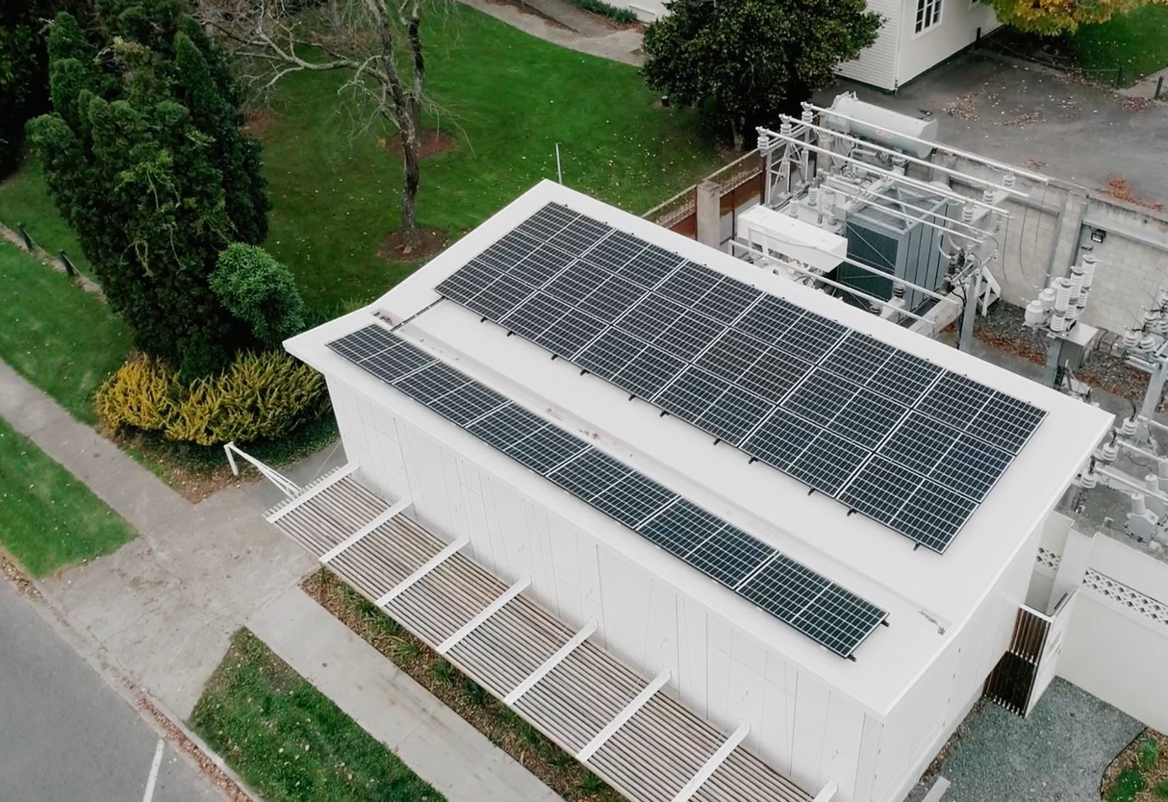
Why We Look at the Membrane Before the Modules
A rooftop PV array is supposed to sit untouched for twenty-five years. The membrane under it rarely lasts that long without help. That mismatch is the single most expensive mistake we see on commercial solar in Lexington, and it is why we want to be in the room before a solar contractor measures the roof. When a building owner along the Nicholasville Road retail corridor or out near the Hamburg shopping district asks us about going solar, our first question is never about panel wattage. It is about how many years of service life the existing roof has left.
If that roof has eight years left and the array has twenty-five, somebody is going to pay to lift, stage, and reset that entire system mid-life. On a mid-size array that detach-and-reset cycle routinely runs tens of thousands of dollars, and it lands on the owner, not the solar installer who has long since closed the job. We would rather have the uncomfortable conversation now: recover or replace the membrane first, then mount solar on a roof that will outlive the panels.
Racking Penetrations and the Two Ways to Anchor an Array
There are broadly two ways to hold a PV array down on a low-slope commercial roof, and each one changes the roofing scope. Ballasted systems use weighted trays or concrete blocks to keep the array in place without cutting through the membrane. Mechanically attached systems anchor each foot into the deck, which means every standoff becomes a penetration that has to be flashed, sealed, and tied into the warranted membrane the same way a pipe or a curb would be.
We care about which one you are using because the failure modes are different. A ballasted array trades penetrations for weight, and that weight has to be checked against what the structure can actually carry. A mechanically attached array trades weight for dozens or hundreds of new holes in a roof that was watertight the day before the solar crew arrived. Neither is wrong. But a penetration that gets a generic rubber boot instead of a proper flashing detail becomes a leak that nobody notices until it has soaked the insulation around it.
Weight, Uplift, and Wind Across an Open Roof
Lexington sits in the path of the spring and summer storm lines that roll across central Kentucky, and an array raised off the deck behaves like a sail. Wind moving across an open warehouse or distribution roof near the I-64/I-75 interchange generates uplift on the leading rows and the perimeter, and that load has to be resolved either through ballast weight, mechanical attachment, or a combination of both. We do not engineer the array , that is the solar EPC's job , but we do confirm that the attachment and ballast plan is compatible with the roof assembly and the edge conditions before the membrane warranty is put at risk.
On older buildings, the structural margin is the real constraint. A 1970s or 1980s commercial building was not designed with a future solar array in mind, and stacking ballast across the field can exceed the original design load. When that is the case, a lighter mechanically attached system or a structural review becomes the path forward rather than simply piling on blocks.
Membrane Compatibility and Walkway Protection
Not every membrane is a good host for solar. A white reflective TPO or PVC field is the common choice under arrays in our market because the cool surface keeps the area beneath the panels from running hot, and a mechanically attached single-ply gives a stable, predictable substrate for racking. We also plan walkway protection at the outset, because a solar array means a roof that gets walked on for the life of the system , for cleaning, for inverter service, for monitoring. Protected pathways keep that traffic from abrading the membrane in the exact spots where crews step every visit.
Conduit is the other detail that gets overlooked. The runs from the array down to the building's electrical service cross the roof and penetrate it, and conduit fastened straight to the membrane chafes a hole over a few seasons of thermal movement. We want standoffs under those runs and proper through-roof details at every penetration, flashed by the roofer rather than improvised by the electrician.
Coordinating Two Warranties That Do Not Talk to Each Other
A solar-plus-roof project carries two separate warranties , the membrane manufacturer's and the solar equipment manufacturer's , and they are not written to account for one another. Most major single-ply manufacturers will warrant a roof with an array on it, but only if the system design, the ballast pads, the walkway protection, and the penetration details meet their published requirements and pass a pre-installation review. If the solar crew installs first and asks questions later, that review never happens and the membrane warranty can be voided on a roof that is otherwise sound.
Our role is to keep those two warranties from colliding. We sequence the work so the membrane is installed and inspected before any racking is placed, we arrange the manufacturer's warranty review of the solar layout, and we document the penetration details so both warranties survive. We do not sell solar systems, and we are not trying to. What we sell is the assurance that the roof under your investment is the right roof, prepared the right way, so the panels and the membrane both reach the end of their service lives without an expensive surprise in the middle.
Helping Lexington Owners Make the Call
Commercial solar interest in Lexington is driven by the federal investment tax credit, Kentucky utility programs, and the plain math of offsetting load on a building that runs lights and HVAC all day. Those incentives are real, and they make solar attractive for warehouses, manufacturing facilities, and large retail boxes across Fayette County. But the incentive math assumes the roof is ready. We help owners see the roofing side of that equation clearly , service life, structural capacity, membrane choice, and warranty coordination , so the decision to go solar is made with the whole picture in view, not just the panel quote.
Solar Roof Integration Questions
Should we replace the roof before adding solar, or can we mount on what we have?
It comes down to remaining service life. A membrane with fifteen or more good years left is a fine host for an array. A roof with seven years or less almost always wants replacement first, because lifting and resetting the array during a future tearoff costs more than recovering the roof now and mounting solar onto a fresh surface. We assess the membrane and give you an honest service-life read before any solar contractor is engaged.
Do the panel mounts have to puncture the roof?
Not always. Ballasted racking holds a flat-roof array down with weighted trays and never penetrates the membrane, which is common on Lexington's low-slope commercial roofs. Mechanically attached racking anchors each foot into the deck, and every one of those anchors becomes a penetration we flash individually to the manufacturer's detail and fold into the membrane warranty.
Will adding solar void our roof warranty?
It can, if the array goes up without the manufacturer's involvement. Most single-ply manufacturers will keep the warranty intact provided the ballast pads, walkway protection, and penetration details meet their spec and the layout passes a pre-installation review. We arrange that review as part of the project so the solar work does not quietly cancel your roof coverage.
What membrane works best under an array?
A white reflective TPO or PVC field, usually mechanically attached, is the workhorse under commercial solar here. The reflective surface keeps the area beneath the panels cooler, which helps panel output, and the attached single-ply gives racking a stable base. Where structural load limits ballast, a fully adhered system is the alternative.
Do you coordinate the sequence with our solar installer?
Yes, and the sequence is not optional. The membrane goes down and gets inspected before any racking lands, and conduit penetrations are flashed by us rather than the electrician before wire is pulled. We hold a pre-construction meeting with the solar EPC to lock the sequence, the conduit routing, the penetration details, and the inspection requirements both warranties depend on.