
Mixed Use Roofing in Lexington, KY from Commercial Roofing of Lexington.
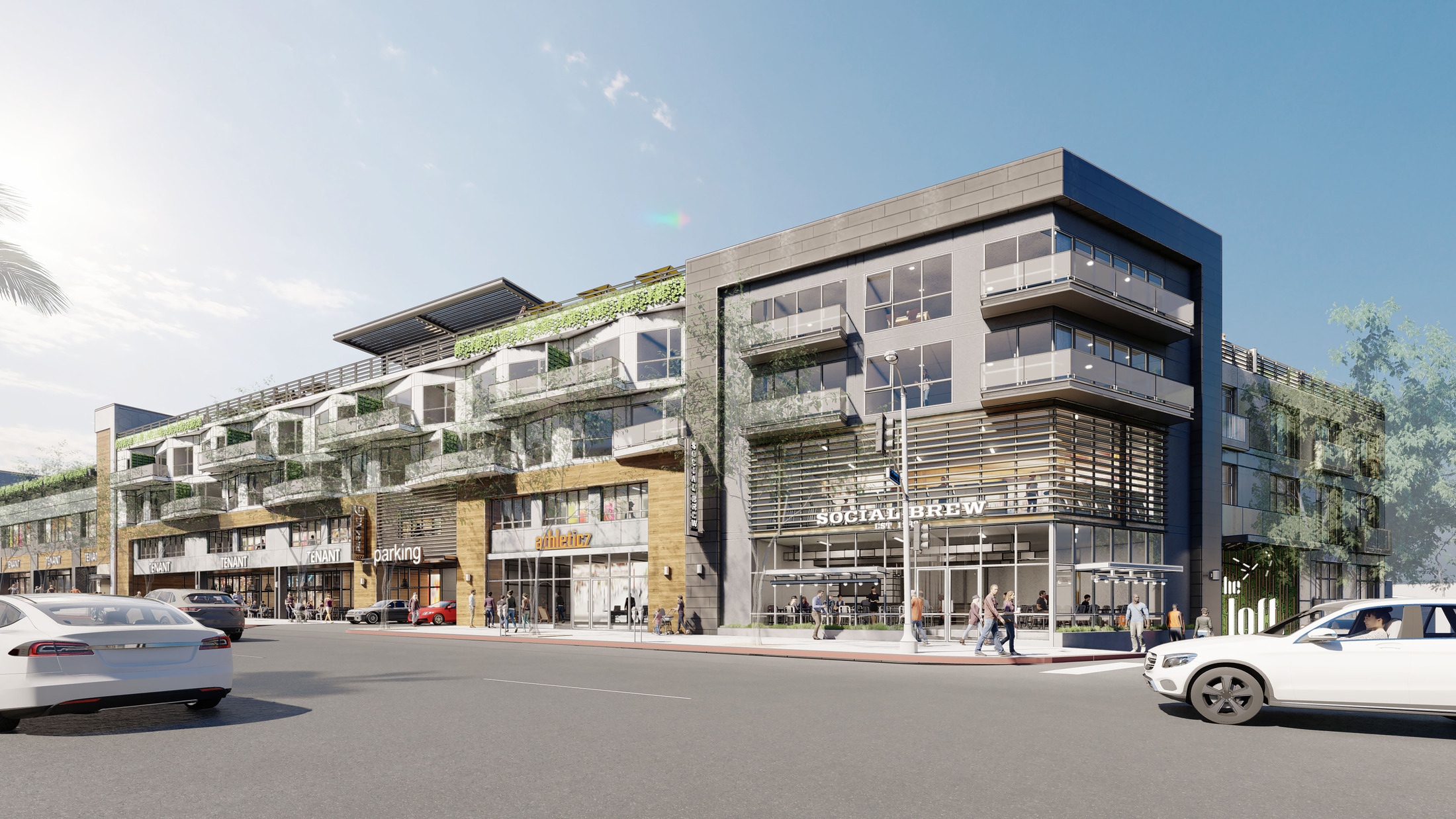
Lexington has been building mixed-use density along corridors that reflect the city's dual identity as a college town and a regional business center. The Distillery District's transformation from industrial to live-work-play, the South Hill neighborhood's emergence as an infill target for transit-oriented development along the proposed bus rapid transit routes, and the continued build-out of downtown blocks between Main Street and Vine Street have all produced buildings where ground-floor retail and hospitality anchor residential or office uses above. The Bluegrass region's climate imposes specific performance demands on the roofing systems that protect these investments, and developers who treat roof specification as a cost-cutting line item on Lexington mixed-use projects tend to regret that decision within five years.
Lexington's climate is a genuine four-season environment that pushes roofing assemblies through meaningful thermal cycling: summer temperatures above 90°F, winter lows that regularly drop below 15°F, and transitional seasons that can produce 40-degree temperature swings within a 48-hour period. The Kentucky River basin's influence and the city's topography create localized ice storm conditions that coat parapet caps, step flashings, and rooftop mechanical equipment with glaze ice several times per winter,a condition that drives water into any flashing termination that has developed even minor sealant shrinkage from summer UV exposure. We specify two-component urethane sealants at all flashing laps and terminations, use stainless steel counterflashing clips rather than aluminum to avoid galvanic corrosion at masonry anchorages, and install heat trace at drains and primary scuppers on north-facing parapets where ice accumulation is most severe.
Waterproofing at the podium-deck level,the most consequential detail on any Lexington mixed-use building,must perform through Kentucky's full temperature range without relying on sealants that will brittle-fail below freezing. The Distillery District's adaptive reuse projects and the new construction blocks around Rupp Arena illustrate the range of structural deck conditions that Lexington mixed-use roofing encounters: historic brick and timber structures where new waterproofing must interface with masonry substrates, and modern post-tensioned concrete decks where the waterproofing system must accommodate PT tendon pocket locations and construction joints. We perform substrate assessments before specifying waterproofing systems and select products whose primer and membrane compatibility with the specific substrate has been tested, not just assumed from generic product data sheets.
Green roofs on Lexington mixed-use buildings have been advanced by the University of Kentucky's urban sustainability programs and by the city's MS4 stormwater permit commitments, which create financial incentives for on-site retention that reduce stormwater utility fees. Buildings in the South Hill area and near the UK campus have incorporated extensive green roof assemblies that satisfy post-construction stormwater requirements while providing insulation value that matters in both Lexington's hot summers and its cold winters. We specify Kentucky-hardy plant palettes that include both sedum species and native grasses capable of surviving the ice storm events that Lexington experiences, backed by growing media with adequate drainage capacity to handle the intense spring rainfall that follows Lexington's dry winter months.
Rooftop amenity decks on Lexington mixed-use buildings are shaped by the city's horse-country aesthetic and its appreciation for outdoor living that extends well into October and November given Kentucky's relatively mild fall. Buildings in the Distillery District and the emerging South Limestone Street corridor feature rooftop bars and resident terraces that take advantage of views toward the downtown skyline and the horse farms visible on the city's eastern and southern edges. These decks require pedestal paver systems rated for Kentucky's freeze-thaw cycling,standard plastic pedestals can become brittle and fail under repeated freeze events, cracking and allowing paver movement that damages the membrane below. We specify adjustable aluminum or heavy-duty composite pedestals with demonstrated freeze-thaw resistance.
Fire-rated assemblies on Lexington mixed-use buildings follow Kentucky's adoption of the IBC, and the Lexington-Fayette Urban County Government's building department has a plan review process that is particularly attentive to occupancy separation documentation for mixed-use projects involving restaurants or entertainment venues at grade level. Bourbon bar and distillery-themed tenant spaces below residential apartments represent a higher fire-load scenario than standard retail, and the project architect's occupancy matrix typically reflects this with elevated separation requirements. We specify assemblies with tested hour ratings from current UL or FM directories and provide assembly documentation formatted for Lexington's permit submission requirements at the time of subcontract execution.
Noise isolation is a significant concern on Lexington mixed-use buildings near the entertainment venues along Main Street and in the Distillery District, where live music and late-night bar activity below residential units creates habitability issues if the building's acoustic design does not address the roof-ceiling assembly's contribution to sound flanking. Rooftop HVAC equipment serving these entertainment spaces often includes high-capacity exhaust fans and kitchen makeup air units that generate both airborne noise and structural vibration. We specify vibration-isolated curb systems and flexible duct connectors as standard practice on any Lexington mixed-use project where food and beverage or entertainment tenants are anticipated on the ground floor.
The multi-level rooflines of Lexington mixed-use projects are often driven by the city's historic district setback and height requirements, which create step transitions between a lower front block fronting a historic street and a taller rear residential block. The step transition is precisely where water accumulates and where flashing complexity is greatest. Lexington's historic preservation guidelines for the downtown commercial district also constrain visible roofing elements,rooftop mechanical equipment must be screened to specific height limits, and parapet cap materials must be compatible with the building's historic masonry character. We work with the Lexington-Fayette Urban County Historic Preservation Review Board's guidelines from the early project phases to ensure that technical roofing requirements and historic character requirements are resolved before permit submission.
Long-term maintenance on Lexington mixed-use roofs benefits from structured programs that address the specific failure modes of Kentucky's climate: ice storm damage to flashing terminations in winter, UV sealant degradation in summer, and the spring tornado and severe weather events that can deposit debris and hail damage across a roof in a single afternoon. We offer bi-annual inspection programs timed to Lexington's seasonal transition points,pre-winter in October to address sealant and flashing before ice season, and post-spring-storm in May to document hail or debris damage while the evidence is fresh and insurance claims can be supported with contemporaneous inspection reports.
- How do ice storms in Lexington affect roofing on mixed-use buildings?
- Glaze ice accumulation at parapets, step flashings, and scuppers drives water behind any flashing termination with sealant shrinkage from prior UV exposure, making freeze-thaw resistant sealants and robust flashing designs essential. Heat trace at north-facing drains and primary scuppers prevents ice dams that can back water under the membrane field. Post-ice-storm inspections should be scheduled before the thaw to document ice accumulation patterns that indicate drainage or flashing deficiencies.
- What podium-deck waterproofing considerations are specific to Lexington's mixed substrates?
- Lexington mixed-use projects include both historic masonry and modern concrete deck substrates, each requiring different waterproofing primers and membrane products for reliable adhesion. Substrate assessments before product specification prevent compatibility failures that void manufacturer warranties. Post-tensioned concrete decks require waterproofing systems that accommodate construction joint and PT pocket locations without discontinuities in the membrane plane.
- Are there financial incentives for green roofs on Lexington mixed-use projects?
- Lexington's MS4 stormwater permit commitments have led to stormwater utility credit programs that reduce ongoing fees for buildings with qualifying on-site retention, including vegetated roof assemblies. The UK urban sustainability program has also documented case studies from Lexington buildings that quantify the insulation and stormwater benefits. These financial returns improve the payback calculation for green roofs on projects where the structural capacity can support the growing media load.
- What should Lexington mixed-use developers know about historic preservation and roofing?
- The Lexington-Fayette Urban County Historic Preservation Review Board has guidelines for visible roofing elements in the downtown historic district, including parapet cap materials, mechanical equipment screening heights, and cornice restoration requirements. Roofing specifications must be coordinated with the preservation architect's design narrative from early project phases to avoid conflicts that require redesign after permit submission. Some products that satisfy both technical and preservation requirements have limited availability and require early procurement.
- How should Lexington mixed-use buildings handle tornado and severe weather risk to the roof?
- Post-spring-storm inspections in May, before the evidence of hail and debris damage fades, provide documentation that supports insurance claims and identifies repair needs before summer heat drives them into the membrane. Wind uplift resistance of the roof assembly should be confirmed against the design wind speed in the project specifications rather than relying on default values. Rooftop mechanical equipment must be anchored to resist the uplift forces that straight-line winds associated with tornado-adjacent severe weather can generate even in events that do not directly track over Lexington.