
Office Building Roofing in Lexington, KY from Commercial Roofing of Lexington.
Lexington Financial Center, the distinctive bank tower at that anchors downtown Lexington's central business district, represents the Class A office standard that sets the tone for commercial roofing expectations across the Bluegrass region. When a multi-tenant office building in Lexington needs its roof replaced or restored, the work scope involves far more than installing a new membrane,it involves coordinating with occupied tenants, protecting HVAC infrastructure that serves lease-regulated interior conditions, meeting Kentucky's energy code requirements, and maintaining the building's appearance and certifications that directly affect lease renewal rates and property valuation.
Occupied building protocols are the first and most consequential factor in office building roofing in Lexington. Unlike a warehouse that can be vacated during roofing operations, a Class A or B office building continues to generate lease revenue during the project, and disrupting tenants is not an option. Vibration from tear-off equipment carries through the deck and disturbs office occupants on upper floors. Odors from adhesives and hot-applied materials penetrate HVAC systems if fresh-air dampers are not locked out during application. Debris falling past windows startles workers and creates safety liability. A commercial roofing contractor who lacks specific experience with occupied office buildings is not equipped to manage these issues, and a Lexington building owner who hires one is accepting risk that will ultimately cost more than the savings justify.
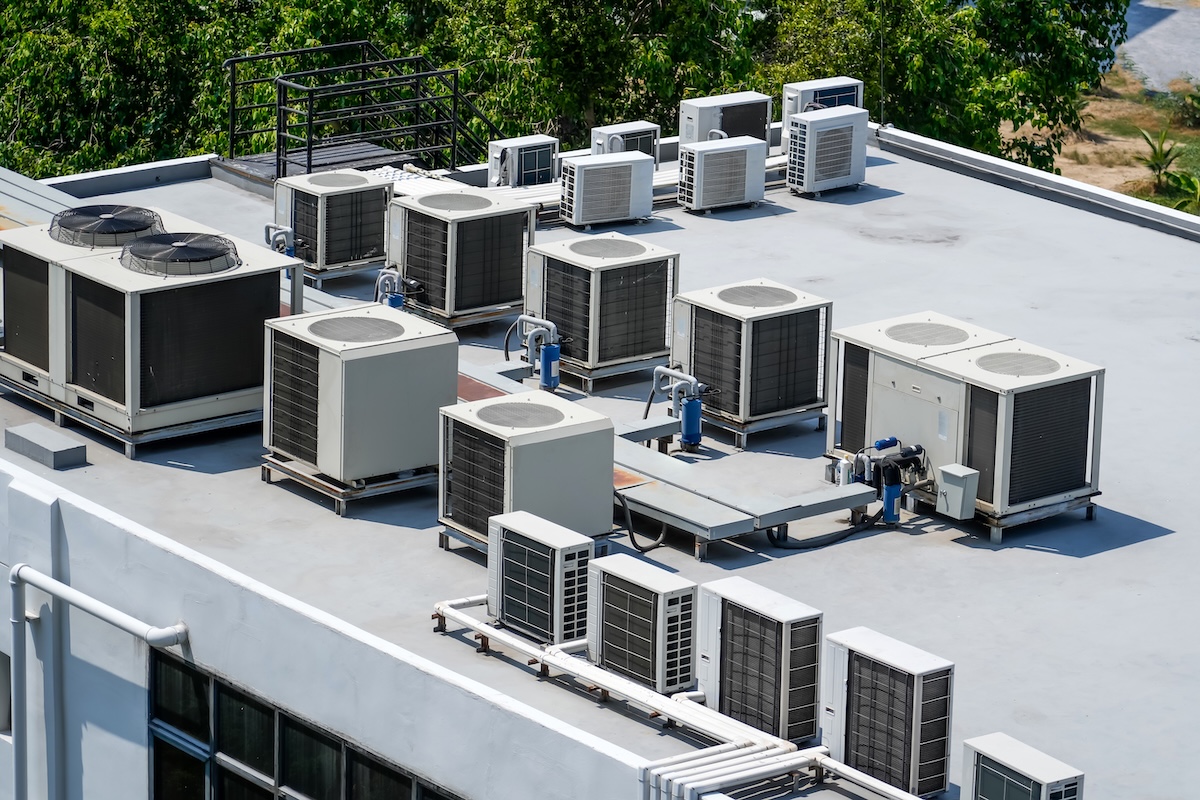
HVAC coordination on a Lexington office building roof is a technical project within the project. Rooftop HVAC units serving individual tenant spaces cannot be taken offline without notifying the affected tenant and potentially triggering lease-stipulated remedies. The sequencing of rooftop work must be planned so that each unit's curb flashing is replaced during the brief period when the unit is shut down, and the unit must be back online before the tenant's business day resumes. This requires coordination between the roofing contractor and the building's mechanical maintenance contractor, and it requires a project manager capable of tracking the status of dozens of equipment curbs simultaneously.
Green roof options are increasingly relevant for Lexington Class A office buildings, particularly those pursuing LEED recertification or competing for corporate campus tenants whose own ESG commitments require them to occupy sustainable facilities. An intensive or semi-intensive green roof assembly,growing media over a root barrier over a protected membrane assembly,adds significant capital cost but delivers measurable benefits: stormwater retention that reduces Lexington's municipal stormwater fees, reduced urban heat island contribution, and LEED points that can make the difference between LEED Silver and LEED Gold certification. Blue-green roof assemblies that combine detention storage with vegetation are a newer option gaining traction in urban Kentucky markets.
Energy codes governing Lexington office building roofing require a minimum of R-25 under Kentucky's commercial energy code, which follows ASHRAE 90.1. For a Class A office building pursuing ENERGY STAR certification or LEED, the assembly typically targets R-30 to R-35. Cool membranes,white TPO, white PVC, or light-colored modified bitumen cap sheets,are specified not just for energy code compliance but because energy performance is a factor in ENERGY STAR scoring for commercial office buildings. A building that improves its ENERGY STAR score meaningfully through a roof system upgrade has a story to tell prospective tenants, and that story has financial value in the Lexington office leasing market.
Lease obligations create specific constraints on office building re-roofing projects that require legal review before the contractor selection process begins. Multi-tenant office leases often contain provisions specifying the building owner's obligations to maintain the roof in watertight condition, the notice requirements before performing work that affects tenant HVAC service, and the remedies available to tenants whose operations are disrupted. A building owner who proceeds with re-roofing without reviewing these obligations risks lease default claims that dwarf the roofing project cost. Legal review of lease provisions and proactive tenant communication are project prerequisites, not afterthoughts.
Parapet walls, rooftop mechanical screens, and penthouse structures are architectural features common to Lexington office buildings that require specific roofing details beyond the basic membrane. Parapet wall cap flashings must be integrated with the roof membrane system and designed to prevent water intrusion from the wall face into the parapet cavity. Mechanical screen walls around rooftop equipment must be re-flashed at their base when the membrane is replaced. Elevator penthouse structures require waterproofing at their transition from wall to roof, and the counterflashing at these transitions is a common source of water entry on older downtown Lexington office buildings.
Contractor selection for Lexington office building roofing should prioritize firms with documented experience on similar occupied commercial projects. A contractor who has completed Class A office building roof replacements in the Lexington or Louisville market understands the coordination complexity and can price it appropriately. Contractors who are accustomed to warehouse or light industrial work will underprice the coordination labor and then struggle to deliver the tenant-friendly execution that the project requires. Manufacturer certification and a completed warranty-project reference list are the baseline qualifications; occupied-building project references are what separates the appropriate candidates from the merely qualified ones.
Cost benchmarks for Lexington office building roofing run higher than warehouse work per square foot because of the coordination overhead, restricted work hours, and phased sequencing required. Budget $14-$20 per square foot installed for a TPO or PVC re-roofing project on a standard Lexington office building, with a premium of $2-$4 per square foot for significant HVAC equipment curb work. Green roof assembly additions start at $18-$28 per square foot for semi-intensive systems and can reach $35-$50 for intensive installations with full growing media and irrigation. Annual inspection and maintenance contracts are a standard cost of ownership for Lexington Class A office properties and run $0.15-$0.30 per square foot per year.
- How should tenants be notified before roofing work begins on a Lexington office building?
- Lease provisions govern notice requirements and vary by lease, but best practice is written notice at least 30 days before major roofing work begins, followed by weekly schedule updates as work progresses. Tenants whose HVAC service will be interrupted should receive specific notice of the shutdown window, typically 48-72 hours in advance for planned interruptions. Building owners should consult their lease attorney before finalizing notification procedures.
- Can HVAC units on a Lexington office building stay in service during roof replacement?
- HVAC units must be temporarily shut down when the roofing contractor replaces their equipment curbs and performs the associated membrane work. The shutdown period for each unit is typically a few hours to a day. Work scheduling should place these shutdowns during overnight hours or weekends when possible to minimize tenant impact. The roofing contractor and mechanical contractor must coordinate the sequence to ensure units are back online before occupied business hours resume.
- What green roof options make sense for a Lexington Class A office building?
- Semi-intensive green roof assemblies with 4-6 inches of growing media, sedum plantings, and a protected membrane assembly are the most common choice for Lexington office buildings pursuing LEED recertification. They add stormwater retention, reduce urban heat island effect, and contribute to LEED energy and water credits. Intensive green roofs with trees and walking surfaces are possible on structurally reinforced buildings but require structural engineering review before specification.
- Does Kentucky energy code require a cool roof membrane on Lexington office buildings?
- Kentucky's commercial energy code under ASHRAE 90.1 requires R-25 minimum for low-slope roof assemblies and strongly incentivizes reflective membranes through its energy compliance pathway. A white TPO or PVC membrane is the most straightforward way to meet the energy code's cool roof provisions while also qualifying for ENERGY STAR building certification points. Buildings pursuing LEED Gold typically specify R-30 or higher to maximize energy credit scores.
- How do lease obligations affect timing of office building re-roofing in Lexington?
- Multi-tenant leases often contain provisions requiring notice before roof work, specifying owner obligations to maintain waterproof conditions, and establishing remedies for disrupted operations. Before selecting a roofing contractor, a Lexington building owner should have their lease attorney review all tenant leases for these provisions and develop a compliance plan. Proceeding without this review can expose the owner to default claims that are far more expensive than the roofing project itself.