
Emergency Dry In Tarping in Lexington, KY from Commercial Roofing of Lexington.
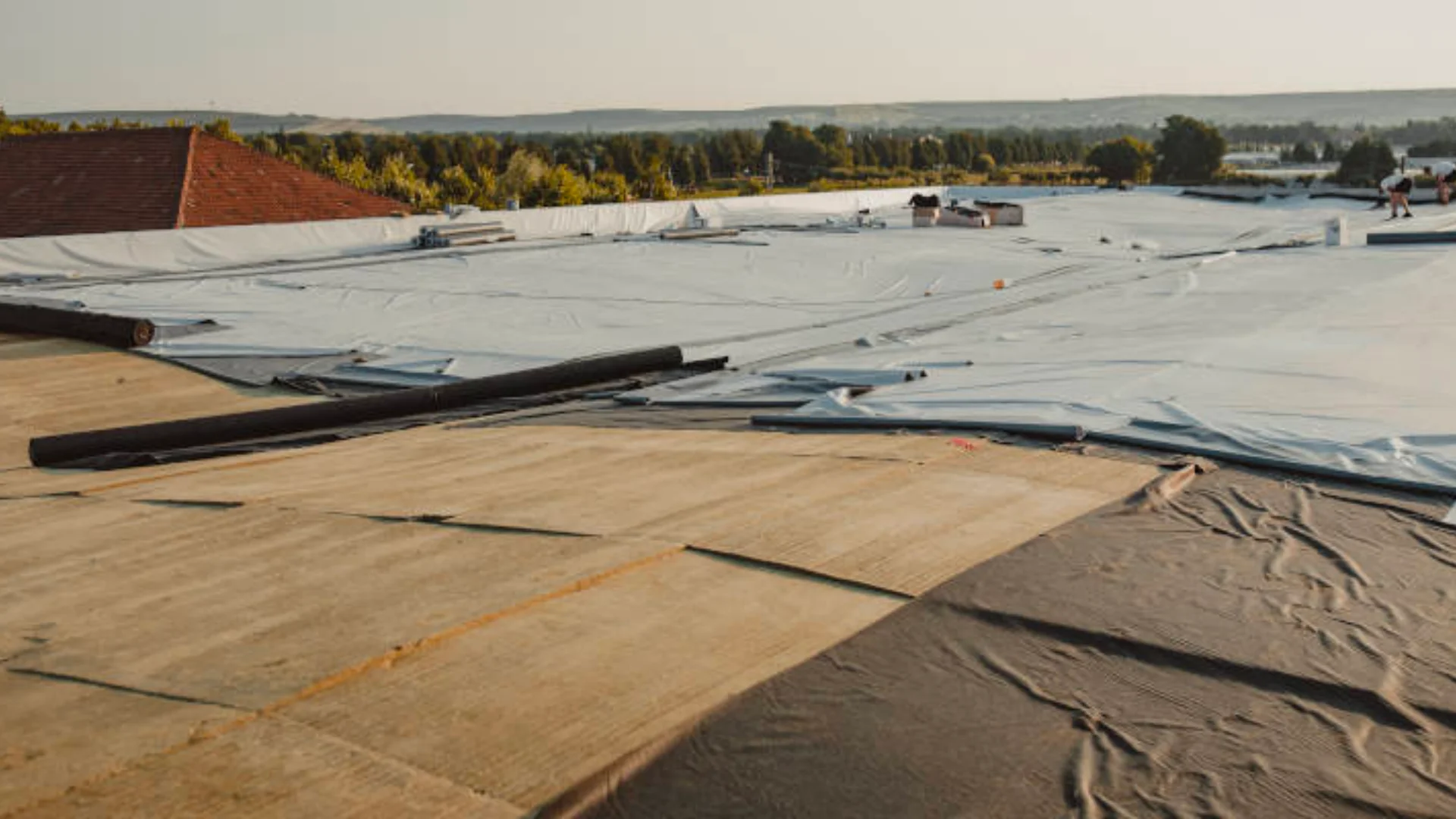
Emergency dry-in and tarping is the response that happens before a permanent plan exists , when a Lexington commercial building has sustained roof damage from a storm, a structural failure, or a sudden catastrophic leak event and the interior needs protection immediately. The goal is simple: stop water from entering the building while the permanent repair or replacement scope is being planned, permitted if necessary, and scheduled. The execution is less simple, particularly on large or occupied commercial buildings where the dry-in itself has to be managed as a safe work operation on a potentially compromised roof surface.
Lexington's spring convective storm season generates the highest concentration of emergency dry-in calls we receive. April through June brings the combination of organized storm systems pushing up from the south, strong thunderstorm cells that develop over the Bluegrass region, and periodic derecho-style wind events that can damage roof assemblies across a wide geographic area in a single afternoon. A building that has lost a significant section of membrane to wind uplift, had rooftop equipment displaced into the roof surface by straight-line winds, or sustained hail damage that punctures an aging membrane isn't a candidate for temporary patching , it needs a dry-in that will hold for 30 to 60 days while the permanent solution is engineered and executed.
UK HealthCare buildings and Baptist Health Lexington represent the most time-sensitive emergency dry-in situations in the Lexington market. A hospital building with a compromised roof over a patient care floor, a sterile processing department, or a pharmacy cannot tolerate the interior moisture intrusion that even a slow overnight rain event delivers through a failed section of roofing. Hospitals have regulatory obligations around environmental controls, and a water event that affects a critical care area triggers incident reporting requirements that create consequences well beyond the cost of the roof repair itself. When we have advance relationships with hospital facility managers, the emergency response protocol is established before the emergency occurs , who to call, what access authorization is needed, and where the rooftop work can begin without waiting for morning approval chains.
Occupied retail centers along Hamburg Pavilion, Fayette Mall, and the Beaumont Centre corridor have a different emergency calculus. A storm event that damages a roof section over an active retail tenant creates an immediate liability exposure for the property owner , a wet floor during business hours, a closed store due to water intrusion, or damaged merchandise all generate tenant claims that the property owner's insurance carrier will need to address. The emergency dry-in that prevents a second interior event before the permanent repair is executed is often the most cost-effective step the property owner can take from a risk management perspective.
The mechanics of commercial tarping on large flat roofs require equipment and planning that differs from residential emergency work. Commercial tarps need ballasting or mechanical anchoring to remain in place in Lexington's wind conditions , a ballasted tarp on a commercial flat roof uses water ballast bags or sandbag perimeter weighting to secure the tarp perimeter and lap edges. For larger damaged areas, we may specify an adhered temporary membrane , a peel-and-stick or torchable emergency membrane , that provides a more durable dry-in than a tarp for situations where the permanent repair timeline extends beyond 30 days or where the roof configuration makes tarp ballasting impractical.
Structural assessment before dry-in work is a non-negotiable step when the roof damage involves potential structural compromise. A hailstorm that punctures a membrane has not necessarily compromised the structural deck, but a tree limb that has penetrated the roof or a wind event that has lifted a section of roofing assembly may have. Before we put crew members on a damaged roof, we assess the structural integrity of the area to be worked , including the condition of any visible deck, the stability of any displaced equipment, and the presence of any electrical or mechanical hazards created by the damage event. Safety on a compromised roof is not a procedural box to check; it's the prerequisite for everything else.
Documentation during the emergency dry-in phase is the foundation of the insurance claim process. Every square foot of damaged area should be photographed before any temporary or permanent repair begins. The sequence of damage , what the roof looked like immediately after the storm, what conditions changed during the dry-in, and what the permanent repair scope ultimately addressed , needs to be documented in a way that supports the claim narrative. We provide photographic documentation and written damage summaries as a standard component of our emergency response work, specifically because most of our commercial clients will be filing an insurance claim for storm-related damage and our documentation has to support that process.
The transition from emergency dry-in to permanent repair requires a clear communication protocol with the building owner. The dry-in is temporary by definition, and the property owner needs to understand its limitations , what weather conditions it is designed to handle, how long it is expected to remain effective, and what the trigger conditions are for immediate notification if the dry-in is compromised before the permanent repair is complete. We provide written dry-in scope documentation that includes these parameters, so there is no ambiguity about what has been done and what remains to be done.
Response time matters in emergency dry-in situations, and we're honest about our current capacity when calls come in. During the peak April-June storm season, a significant weather event across the Lexington metro can generate concurrent emergency calls from multiple commercial buildings, and response time is affected by current demand. For building owners who want a priority response position, we offer advance agreements that establish response priority before an emergency occurs , a sensible investment for hospital facilities, critical research buildings, and high-value occupied commercial properties where the cost of a delayed response is measured in patient care disruption, experiment loss, or tenant claims rather than just roof repair cost.
Questions Owners Ask
How quickly can you respond to a storm-damaged commercial roof?
Our response time depends on current demand, particularly during the April-June Lexington storm season when multiple buildings may be calling simultaneously. We prioritize hospital and medical facilities and buildings with active interior water intrusion. For routine storm assessment and dry-in on unoccupied or low-occupancy buildings, we aim to respond within 24 to 48 hours of the weather event. Contact us directly , not through the website form , for emergency situations.
How long does an emergency tarp last on a commercial roof?
A properly ballasted commercial tarp on a flat roof is typically reliable for 30 to 60 days under normal Lexington weather conditions. High-wind events can compromise tarp ballasting, and we recommend monitoring after any wind event during the dry-in period. If the permanent repair timeline extends beyond 60 days, we typically recommend transitioning to an adhered temporary membrane for better long-term protection.
Should I call my insurance company before or after the emergency dry-in?
Call your insurance carrier and begin the emergency dry-in simultaneously if you have active interior water intrusion. Insurance policies generally require policyholders to take reasonable steps to prevent further damage, and a delay in dry-in while waiting for an adjuster authorization can create an argument that additional interior damage was not mitigated appropriately. Document everything before, during, and after the dry-in work regardless of the sequence with your carrier.
Does the emergency dry-in cost count toward my permanent repair or replacement?
Emergency dry-in is typically a separate line item from permanent repair or replacement costs. For insurance purposes, both costs are generally claimable as storm-related damage mitigation and repair. We itemize emergency dry-in costs separately from permanent scope costs specifically to support clear insurance claim documentation.
What if more damage is discovered during the dry-in that wasn't visible initially?
Supplemental damage is common , the full extent of storm damage to a commercial roof isn't always visible until the temporary covering is removed and the deck is exposed. We document any supplemental findings photographically and in writing, and we coordinate with your insurance carrier's adjuster to ensure the supplemental damage is included in the claim scope. Do not let a contractor begin permanent repair work until all damage has been documented and the claim scope is agreed upon with the carrier.