
Government Building Roofing in Lexington, KY from Commercial Roofing of Lexington.
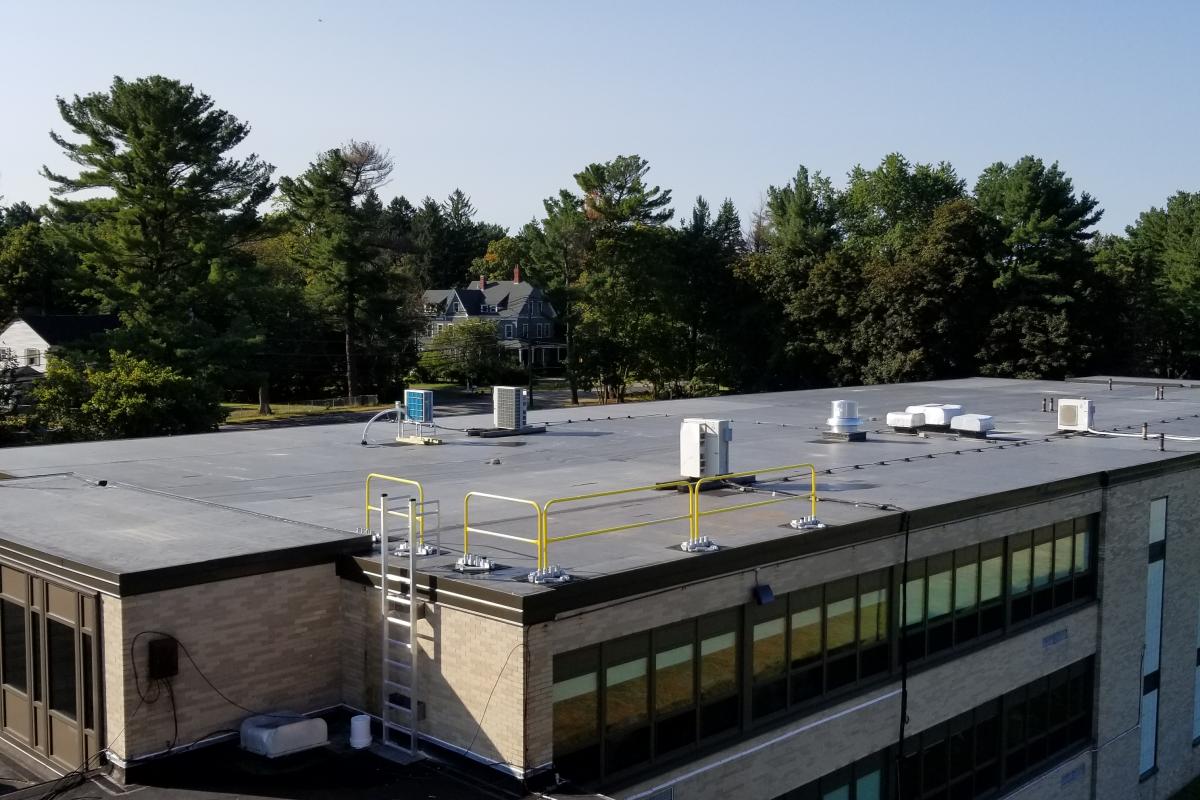
Lexington's municipal building portfolio spans everything from the Fayette County Courthouse on Main Street to the dozens of fire stations and public library branches scattered across a metro area that has grown considerably with the horse industry and University of Kentucky presence. Roofing these structures demands a contractor who understands the Urban County Government's procurement framework, which routes projects above $30,000 through formal competitive sealed bids managed by the Division of Purchasing. Contractors unfamiliar with Lexington-Fayette Urban County Government bid packets often miss required attachments like certificate of insurance minimum limits tied to project value or the mandatory local hiring preference certification, and those omissions result in automatic disqualification before a single shingle price is evaluated.
Kentucky's climate delivers a demanding test for government roofing systems. Lexington sits in a transitional zone that receives both significant snowfall accumulation and summer heat that routinely pushes heat index values above 105 degrees. The freeze-thaw cycling that runs through November into March is particularly destructive to flat membrane roofs common on municipal structures like the Central Library on East Main and the various Lexington Public Works maintenance facilities along Industry Road. Ponding water on low-slope roofs freezes overnight, expands into seams, and creates microscopic channels that compound year after year until a catastrophic failure during a spring storm forces emergency spending that disrupts an entire department's operations budget.
The Lexington Police Department headquarters and the Rupp Arena complex both illustrate the scale of roofing challenges in publicly owned Lexington buildings. Large flat roof expanses on police and public safety facilities must maintain uninterrupted operations, meaning any re-roofing project requires phased sequencing that keeps communications infrastructure, evidence storage areas, and dispatch centers operational throughout construction. Pre-construction coordination meetings with facility managers at the Department of Public Safety are not optional courtesies but contractual requirements embedded in Lexington's standard government construction contracts.
Davis-Bacon Act prevailing wage requirements apply to all federally funded Lexington municipal projects, and a significant portion of the Urban County's capital improvement budget runs through Community Development Block Grant allocations or federal transportation funding that triggers those obligations. Payroll records must be submitted weekly using WH-347 forms, and any specialty contractor on the job shares the same reporting burden. Lexington's contract administrators conduct random payroll audits, and discrepancies between submitted wages and actual payments can result in contract suspension and debarment from future Urban County bidding opportunities.
Historic preservation requirements shape roofing options for several of Lexington's most prominent government buildings. The old Fayette County Courthouse and buildings within the Gratz Park historic district carry State Historic Preservation Office review requirements that limit material choices. TPO membranes and highly reflective white coatings may not be permitted on roofs visible from street level on historic structures, while replacement of original slate or clay tile roofing on eligible buildings requires matching material and profile specifications that must be submitted for SHPO review before the bid advertisement is published. Contractors who have not navigated Kentucky SHPO coordination before should build at least six weeks into their project schedule for that approval pathway.
Lexington's growing emphasis on sustainability has pushed energy efficiency requirements into municipal roofing specifications. The city's participation in regional climate initiatives has translated into requirements for cool roof coatings or minimum SRI values on new membrane installations for Urban County-owned buildings, particularly those seeking LEED certification as part of larger renovation packages. The Lexington-Fayette Urban County Government has been progressively updating its facilities master plan, and roofing replacements on buildings like the Government Center on West Main are being bundled with solar-ready deck blocking and added insulation to meet updated energy codes under the 2021 Kentucky Building Code adoption cycle.
Bonding requirements for Lexington municipal roofing work are substantial. Performance bonds and payment bonds at 100 percent of the contract value are standard on projects exceeding $25,000, and the surety company must carry an A.M. Best rating acceptable to the Urban County's Finance Division. Bid bonds equal to five percent of the submitted bid price accompany sealed submissions, and failure to deliver the performance bond within ten calendar days of approval notice results in forfeiture of the bid bond and removal from consideration. General contractors and roofing specialty contractors both need to review their bonding capacity before pursuing larger Urban County projects, as the combined bonding exposure across multiple public projects can approach surety program limits unexpectedly.
Warranty terms negotiated into Lexington government roofing contracts differ meaningfully from commercial sector norms. The Urban County typically requires manufacturer's NDL (No Dollar Limit) warranties with a minimum 20-year term on major membrane replacements, and the installer warranty covering workmanship runs separately for a minimum of two years. More significantly, Lexington's standard contracts include a provision requiring the contractor to perform a formal inspection at the 11-month mark before the first-year warranty period closes, submitting a written report to the facility manager. Missing that inspection milestone has been treated as a warranty breach in at least one prior Urban County dispute, so calendar management for post-completion obligations matters as much as the installation itself.
Contractors seeking a foothold in Lexington's government roofing market should register in the Urban County's vendor database and monitor the Kentucky Procurement Technical Assistance Center bulletin board alongside the city's own bid portal. Attending pre-bid conferences for Lexington Public Works or Lexington-Fayette Urban County School District projects,which share procurement infrastructure with the Urban County Government,is the most direct way to understand local expectations, meet the project managers who write specifications, and demonstrate the organizational capacity that separates competitive bids from winning ones. Long-term relationships with Lexington facility managers, built through successful smaller contracts, consistently translate into preferred consideration when buildings like fire stations or branch libraries come up for major capital roof replacements.
- Does Lexington-Fayette Urban County Government require prevailing wages on all roofing contracts?
- Prevailing wage requirements apply specifically to projects receiving federal funding, including those financed through CDBG allocations or federal transportation grants. State-funded and locally funded projects follow Kentucky's own wage statutes, which have different thresholds and reporting structures than federal Davis-Bacon requirements. Contractors should confirm funding sources with the Urban County's project manager before submitting a bid.
- What bonding levels does Lexington require for government roofing work?
- Projects exceeding $25,000 typically require both a performance bond and a payment bond each at 100 percent of contract value, plus a bid bond of five percent with the sealed submission. The surety must hold an A.M. Best financial rating acceptable to the Urban County Finance Division. Failure to deliver the performance bond within ten days of approval results in bid bond forfeiture.
- How does Lexington handle roofing on buildings in historic districts?
- Buildings within the Gratz Park historic district and other SHPO-eligible structures require Kentucky State Historic Preservation Office review before specifications are finalized. Material choices including membrane color, insulation profiles, and any penetration modifications must comply with Secretary of the Interior Standards. Contractors should expect at least six weeks for SHPO review when it is required.
- What energy efficiency requirements apply to Lexington municipal roofing projects?
- The Urban County has adopted cool roof SRI minimums for new membrane installations on city-owned buildings, particularly those being renovated under LEED-track projects. The 2021 Kentucky Building Code adoption cycle also increased insulation R-value requirements for commercial low-slope roofs. Specifications for Urban County projects increasingly include solar-ready blocking provisions as part of facilities master plan compliance.
- Where do roofing contractors find Lexington government bid opportunities?
- The Lexington-Fayette Urban County Government posts sealed bids on its official procurement portal, and vendors should also register in the city's vendor database to receive direct notifications. The Kentucky Procurement Technical Assistance Center bulletin board aggregates state and local government bids and is a reliable secondary source. Attending pre-bid conferences is strongly recommended because Lexington project managers use those sessions to clarify specification intent.