
Built Up Roofing in Lexington, KY from Commercial Roofing of Lexington.
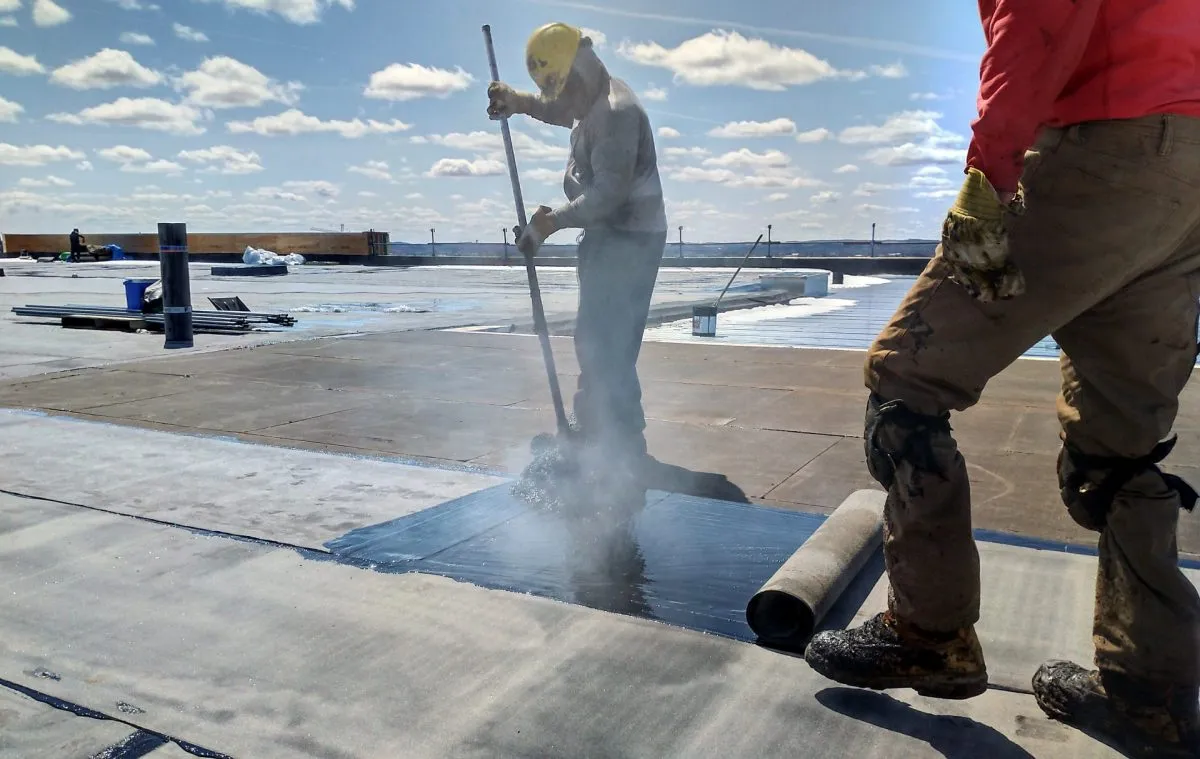
Built-up roofing has been the backbone of Lexington's commercial stock for generations. Walk through the Warehouse Block off Manchester Street, along the old tobacco warehouse rows near the Distillery District, or across the University of Kentucky's older academic quad, and you're looking at built-up roofing systems that were installed when gravel ballast and hot-mopped felts were the only real option for a low-slope commercial building. That history matters because it shapes every assessment conversation we have with property owners today.
A true BUR system , whether it's a two-ply, three-ply, or four-ply assembly , is built for longevity. The multiple layers of bitumen and reinforcing felt create a monolithic waterproofing membrane that distributes stress across the entire field rather than concentrating it at seams. When these systems are well-maintained and the insulation beneath them has stayed dry, we routinely find 35- to 40-year-old built-up roofs that are still performing. That's the argument for preservation rather than immediate replacement.
The diagnostic challenge with legacy BUR in Lexington's climate is freeze-thaw damage to the gravel surface and, more critically, moisture infiltration into the insulation layers. Lexington averages just under 50 inches of precipitation annually, with May and July each delivering more than five inches of rain in concentrated events. Once water finds a breach in the flood coat , typically at pitch pockets, drain flanges, or aged flashing terminations , it can migrate laterally through the insulation for years before the building owner sees a ceiling stain. We use infrared scanning and core sampling to map wet areas before we ever recommend a scope of work.
The UK campus situation is instructive. The university has a mix of BUR vintages across its academic and research buildings, some dating to the 1960s expansion period. UK HealthCare's older medical buildings on Rose Street and Limestone Street have similar BUR systems with decades of patched flashing repairs layered on top of each other. When we assess these buildings, the flashing condition is often the determining factor , the field membrane may still be sound, but failed counter-flashings and deteriorated pitch pockets at rooftop mechanical equipment have allowed concentrated water entry at specific penetrations.
Recovery versus tear-off is the central decision in every BUR project we handle. The International Building Code limits buildings to two roofing assemblies, so a building that already has one recover layer is facing full removal. But even where a recover is code-permissible, wet insulation beneath the existing membrane disqualifies it , installing new material over compromised insulation simply seals in moisture and accelerates the degradation of whatever system goes on top. Our standard process is an infrared moisture scan (best conducted on a clear night after a warm day) followed by core cuts to verify the scan findings before we finalize the recommendation.
For occupied buildings , and almost all of our Lexington BUR projects involve occupied facilities , the work sequencing matters as much as the technical specification. A phased tear-off on a multi-wing hospital building or a Coldstream Research Campus tenant building requires daily close-outs, temporary drain protection, and staged material staging that doesn't compromise the building's fire egress or loading dock access. We've managed re-roofing projects on buildings where the tenant couldn't tolerate a single interior disruption, which means the work plan has to be airtight before the first fastener is pulled.
When the assessment supports a BUR recover, we typically specify a modified bitumen cap sheet over a new base layer as the surfacing system, which brings the old BUR assembly current with modern performance expectations while preserving the insulation investment. For full replacements, we evaluate whether to specify a new BUR system , which remains appropriate for certain building types and owner preferences , or to transition to a TPO, EPDM, or PVC membrane system depending on the building's drainage configuration, roof traffic requirements, and mechanical load density.
Flashing details are where BUR systems fail on historic Lexington commercial buildings more than anywhere else. The masonry parapets on Warehouse Block buildings and the stone coping on older downtown commercial structures create specific termination challenges. Proper counter-flashing embedded in reglets, correctly sloped cant strips at wall-to-roof transitions, and metal-capped pitch pockets at pipe penetrations are the details that determine whether a rebuilt BUR system lasts another 20 years or starts leaking within five. We don't cut corners on flashing scope because that's where the warranty claims come from.
Owners of older Lexington commercial buildings with BUR systems should understand that these roofs can be managed economically with systematic maintenance , annual inspections, prompt repair of developing flashing problems, and clear-coat maintenance of the flood coat surface where it's beginning to oxidize and alligator. The buildings that end up needing emergency replacement are almost always buildings where deferred maintenance allowed a manageable flashing repair to become a widespread moisture problem. A proactive BUR maintenance program costs a fraction of a premature replacement.
Questions Owners Ask
How do I know if my BUR system needs replacement or can be repaired?
The key factor is insulation moisture content. We conduct infrared scans and core cuts to determine how much of the insulation is wet. If fewer than 25% of the roof area shows moisture intrusion and the membrane itself retains adhesion, repair and recover options are usually cost-effective. Widespread wet insulation , or a building that already has one recover layer , typically points toward full replacement.
What does a BUR roof inspection involve?
We start with a visual survey of the field membrane, gravel surface, all flashings, pitch pockets, drains, and penetrations. We note areas of alligatoring, exposed felts, and flashing separation. On buildings over 10 years old or where we see evidence of water entry, we follow the visual with an infrared scan and selective core sampling to assess insulation condition.
Can you recover over an existing BUR system?
Yes, if the building hasn't already had one previous recover layer (IBC limits you to two assemblies total) and if the existing insulation tests dry on core sampling. Recovering over wet insulation is never appropriate , it seals in moisture and compromises the new assembly from day one.
Why are pitch pockets such a frequent problem on older BUR roofs?
Pitch pockets are open-top metal boxes filled with bitumen or sealant around penetrations that weren't given a proper curb or sleeve. The fill material dries and shrinks over time, creating gaps that admit water. On Lexington's commercial buildings with aging mechanical equipment, these are among the first failure points we address.
How long does a properly maintained BUR system last?
A four-ply BUR system with proper flashing and regular maintenance can perform for 30 to 40 years. We've assessed BUR systems in the Warehouse Block district that are functioning well past that mark. The systems that fail prematurely almost always have identifiable maintenance gaps , unfilled pitch pockets, separated counter-flashings, or drains that were allowed to back up and pond water against the edge of the membrane.