
KEE Single Ply Roofing in Lexington, KY from Commercial Roofing of Lexington.
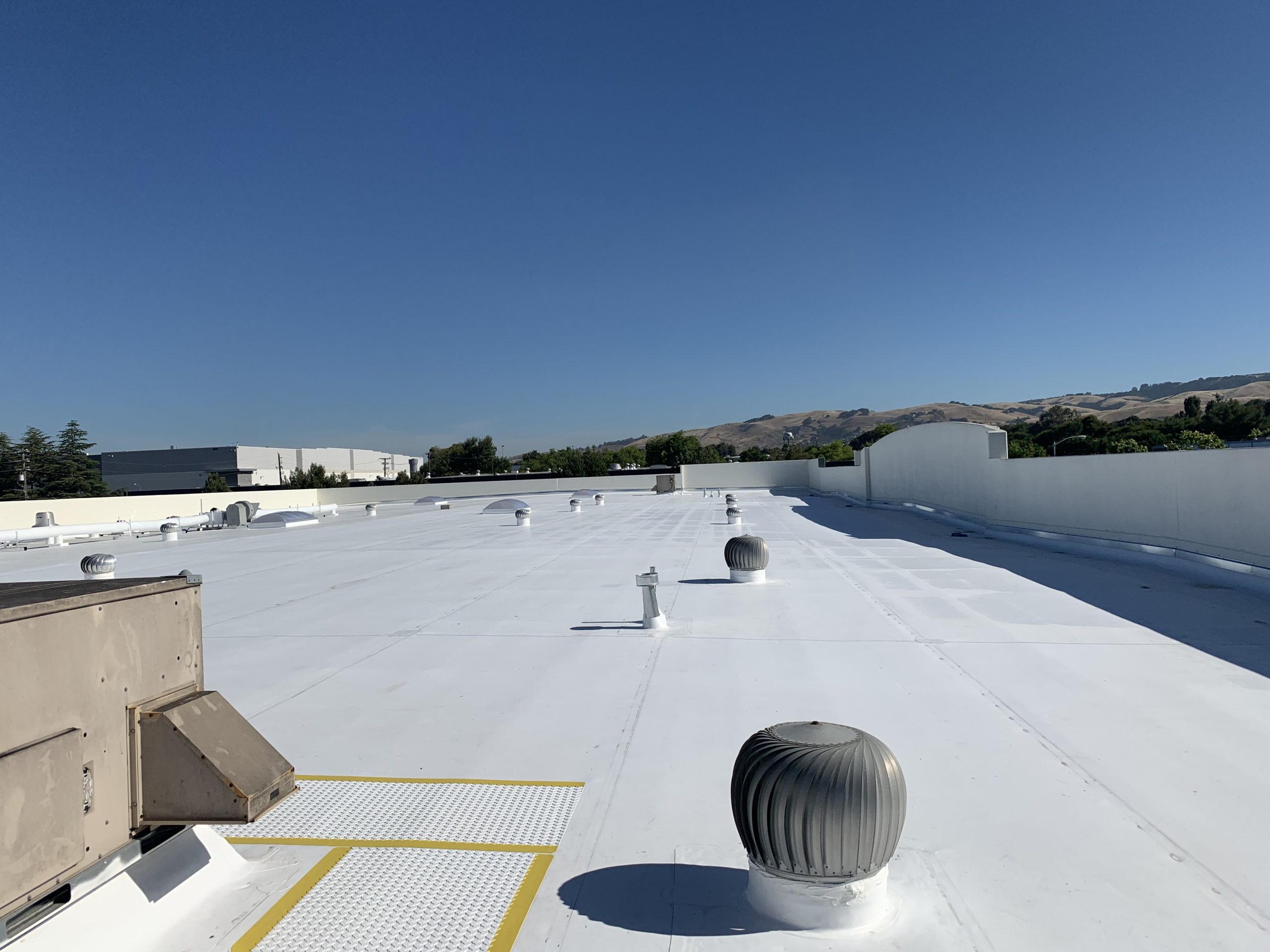
KEE , ketone ethylene ester , is the premium single-ply membrane that most Lexington commercial building owners haven't heard of until a specific project condition makes it the right answer. It occupies a narrower specification niche than TPO or EPDM, but within that niche , chemical-resistant applications, demanding thermal cycling environments, and life-science buildings where membrane failure consequences are severe , it outperforms both of the mainstream alternatives in ways that justify its higher installed cost. Understanding when KEE is the correct specification for a Lexington commercial building requires understanding what makes it chemically and mechanically distinct from the single-ply membranes that dominate the local market.
KEE membranes are formulated with a plasticizer that is chemically bound to the polymer matrix rather than simply mixed in. This is the critical distinction from standard PVC, which uses a free plasticizer that migrates out of the membrane over time, causing the PVC to stiffen and become brittle , a process that accelerates in cold climates with significant freeze-thaw cycling. Lexington's nearly 90 annual freezing-degree nights make plasticizer migration a meaningful performance variable for PVC membranes, and it's one reason KEE has become a preferred specification for demanding Lexington applications. A KEE membrane installed on a Coldstream Research Campus building today will retain its flexibility and weldability that a standard PVC membrane may not.
Chemical resistance is the most frequently cited reason for specifying KEE on Lexington commercial buildings. Coldstream Research Campus is home to life-science companies, pharmaceutical research tenants, and specialty manufacturing operations that generate chemical exhaust , acids, solvents, industrial cleaners , through rooftop ventilation systems. The membrane in proximity to these exhaust stacks is exposed to chemical concentrations that would degrade a standard EPDM or TPO membrane over time. KEE's chemical resistance profile , it resists a broad range of organic solvents, acids, and oils , makes it the specification of choice for roof sections adjacent to chemical exhaust penetrations on research and manufacturing buildings.
Auto-supplier facilities along the Georgetown Road corridor feeding Toyota's plant and the manufacturing operations at Lexmark International and Lockheed Martin Lexington represent another category of KEE application. These buildings may have rooftop exhaust from painting, cleaning, or assembly operations that expose the membrane to chemical environments incompatible with standard TPO or EPDM. The manufacturing operations along Bluegrass Station and Legacy Business Park include tenants with specialty chemical exhaust requirements that their facility managers specify KEE to address , we see KEE in these facilities not as a standard spec but as a targeted response to a specific building condition.
KEE is also used on restaurant and food-service buildings for the same chemical resistance principle, though PVC is more commonly specified in that application because it's less expensive and adequate for grease-exhaust environments. For Lexington restaurant buildings , the food service tenants at Hamburg Pavilion, Fayette Mall, and the Summit at Fritz Farm , PVC is typically the right specification. KEE comes into its own when the chemical environment is more aggressive than food-service exhaust: laboratory solvents, industrial cleaning agents, or specialty manufacturing emissions. The specification decision should be driven by the specific chemical exposure profile, not by a blanket preference for the most expensive option.
Seam quality on KEE membranes is executed by hot-air welding, the same process used for TPO and PVC. The welded seam on a properly installed KEE membrane is as strong as the membrane itself , a tensile failure will tear the field membrane before it separates a properly welded seam. This is a significant advantage over the adhesive lap systems used in EPDM and older modified bitumen, and it's one reason KEE is specified for buildings where seam integrity is critical to protecting the operations below. We verify seam quality on KEE installations with test cuts and probe testing at the same standard we apply to TPO and PVC installations.
Thermal movement performance is another KEE advantage on large-footprint Lexington commercial buildings. Coldstream Research Campus has single-building floor plates that run well over 100,000 square feet, and a membrane on a building of that scale is managing significant thermal expansion and contraction across its full dimension. KEE's flexibility across a wide temperature range , from well below freezing in Lexington winters to mid-summer rooftop temperatures above 150°F , means the membrane accommodates that movement without the stress concentration at fastener and seam locations that can develop in less flexible systems.
The installed cost premium for KEE relative to TPO is real and should be evaluated honestly for each project. On a building where chemical resistance is genuinely required and the membrane will be exposed to exhaust concentrations or chemical splash that would degrade a standard membrane, the lifecycle cost of KEE is lower because it doesn't require early replacement of a degraded TPO or EPDM. On a standard office building or warehouse with no unusual chemical exposure, specifying KEE is spending money on performance characteristics the building will never utilize. We recommend KEE where it's technically justified, not as a universal upgrade.
For property managers at Coldstream Research Campus and Legacy Business Park with diverse tenant mixes, the roof specification decision sometimes has to account for future tenancy , a building currently occupied by a general office tenant may attract a research or light-manufacturing tenant whose operations create chemical exposure the current membrane wasn't specified to handle. In these cases, specifying KEE on the initial installation or replacement is a defensible forward-looking decision that protects the building's leasing flexibility without requiring a premature membrane replacement when the tenant mix changes.
Questions Owners Ask
How is KEE different from standard PVC roofing?
Both are single-ply thermoplastic membranes that are hot-air welded at seams. The key difference is plasticizer chemistry. Standard PVC uses a free plasticizer that migrates out of the membrane over time, causing it to stiffen and become brittle , a process that freeze-thaw cycling accelerates. KEE uses a chemically bound plasticizer that does not migrate, so the membrane retains its flexibility for the full service life. KEE also has a broader chemical resistance profile than standard PVC.
Do I need KEE or will TPO work for my building?
TPO is appropriate for the majority of Lexington commercial buildings , office, warehouse, retail, and most medical applications. KEE is indicated when the building has chemical exhaust penetrations exposing the membrane to organic solvents, acids, or other aggressive chemicals, or when long-term flexibility retention is critical in a demanding thermal cycling environment. We evaluate the specific building use before recommending KEE over TPO.
Is KEE available in white for energy efficiency?
Yes. KEE membranes are available in white and light gray, providing high solar reflectance comparable to white TPO. The energy efficiency argument for KEE is the same as for any light-colored single-ply membrane , reduced surface temperature, lower cooling loads on the building. The white KEE specification is common on Coldstream Research Campus buildings where both reflectivity and chemical resistance are required.
Can KEE be installed over an existing roof assembly?
Yes, where the building qualifies for a recover approach , dry insulation, no prior recover layer, and a stable substrate. KEE recover over existing single-ply or modified bitumen is executed with the same recovery board and fastening approach as any other single-ply recover. The substrate condition requirements are the same regardless of the membrane type specified for the new surface.
What warranty terms are available for KEE roofing systems?
Major KEE membrane manufacturers offer 15- to 30-year material warranties on properly installed systems, with enhanced coverage terms for contractor-certified installations. The specific warranty terms vary by manufacturer and installation specification. We maintain certification with KEE membrane manufacturers and can offer the full range of available warranty coverage on our installations.